THE RESEARCH SAFARI
  • Home
    • Knowledge Compass
    • Studyvibe
  • A-Z
  • Inquiry Process
    • The Research Grid
    • Key Stages of an Inquiry
    • Research Funnel
  • DEFINING
    • Mindmapping
    • Starburst Brainstorming
    • Graphic Organisers >
      • Student Showcase
    • Questions and Questioning >
      • Knowledge Compass
    • Research Task Verbs
  • LOCATING
    • Great Research Reference Sites
    • Searching the Web >
      • Boolean Searching
    • Searching with Google
    • Sources of Information
    • Website Evaluation
    • Fake websites
  • SELECTING
    • Content Curation
    • Creative Commons
    • Image Library
    • Notemaking >
      • Notemaking Apps and tools
      • Notemaking videos
    • Plagiarism
    • Referencing
  • ORGANISING
  • PRESENTING
    • Animation Tools >
      • Avatars
    • Brochure
    • Cartoon Makers
    • Digital Storytelling >
      • Digital Storytelling Resources
    • eBooks
    • Essay Writing
    • Infographics
    • Multimedia Presentations
    • Oral Presentations
    • Podcast
    • Posters >
      • Pic Collage Gallery
    • Website
  • EVALUATING
  • Mini Safaris
  • Trail Blazers
    • Trailblazer Subscription
    • The Ancient World >
      • Ancient China (Teachers)
      • Ancient China (Students)
      • Ancient Egypt
    • Bees >
      • Bees - Curriculum Links
    • Biomes >
      • Biomes - Curriculum Links
    • Cane Toads
    • Colonial Australia
    • Coral Reefs
    • Deserts
    • Dugongs
    • Government >
      • Government Curriculum Links
    • Great Pacific Garbage Patch
    • Introduced Species >
      • Introduced Species - Curriculum Links
    • Medieval Europe >
      • The Black Death
      • Christianity
      • Medieval Warfare
      • Curriculum Links
    • Rainforests
    • Renewable Energy >
      • Bioenergy
      • Geothermal Energy
      • Hydroelectric Power
      • Solar Energy
      • Wind Energy
    • Shogun Japan >
      • Gallery
    • Water >
      • Water images and infographics
      • Water Videos
      • Curriculum Links
    • Whales
  • Teacher Zone
    • All things Google
    • Australian Curriculum Links
    • Information Literacy Models
    • Information Literacy as a Transversal Competency
    • Infographic Library
    • Learning Frameworks
    • Project Websites
    • Real World Learning
    • Topic Ideas
    • Worksheet Library
  • Links
    • Knowledge Compass
    • Studyvibe
    • UN Sustainable Development Goals Project
    • Inspired Libraries Website
    • Teenage identity and Social Media

Ways of making research topics more dynamic 

  1. Advertisements: students create an advertising campaign to sell a product. The product can be real or imaginary.  
  2. Biographies: students research a person that relates to the topic being covered. It could be an inventor, scientist, musician, explorer or someone 'closer to home' like a grandparent.
  3. Bar Graphs: students create illustrated bar graphs.  These may be used to explore data sets, use statistics to support a point, or illustrate a growth or change in a market. The graph should reflect the resaerch that has been done.
  4. Blogs: students create blogs to record their 'learning journey as they progress through a research task. They should include their challenges, highlights, the great resources they found etc.. The blog then becomes part of the assessment process both during and at the conclusion of their task. Students will start to develop reflective practice which is a valuable metacognitive skill.
  5. Boardgames: students create boardgames as a result of research undertaken and should reflect key concepts that have been learned.  Students play each others games and review them on how informative they were in teaching new knowledge to their classmates. 
  6. Brochures: brochures can be made as either tri-fold or bi-folds. Students can create informational brochure’s based on the research they have been doing. These can also be digitised using something like FlipSnack.
  7. Calendars: There are multiple applications for this. As a class activity every student can be responsible for finding dates related to specific events, people or places. Ideas include birth of scientists/artists, natural disasters, battles, key moments in history (e.g. landing on the moon).  
  8. Collages: students create a collage or collection of images related to a topic. There are multiple online image repositories now that are Creative Commons which avoids plagiarism issues.  Have students select images that reflect different aspects of their research. 
  9. Comic Strips or Books: students create an illustrated comic strip or book representing events from history or a work of fiction. Use one of the comic strip generators provided here.
  10. Editorials: students provide an opinion about a  topic currently being researched.  
  11. Flash Cards: students create question cards that reflect topics being studied. Students use an online flashcard maker to generate the questions and answers. These can then be circulated to all students to test their knowledge an evaluate the quality of their peers' quizzes. If you are a member of Studyvibe find a list of flashcards and quizmakers here.
  12. Glossaries: When students are conducting their research they can also be creating a glossary of terminology that is related to the topic. These glossaries can be used for revision or vocabulary development. They will also help students when writing up their research, regardless of the format. 
  13. Infographics: students use an infographic generator or other online tool to create an infographic about their topic. These can be printed, embedded in a website of blog.
  14. Magazines: students create magazines covering large units of study such as the Industrial Revolution or Darwin’s Theory of Evolution, that way many articles can be written.  Images may also be drawn or printed and added to the publication.
  15. Maps: students create maps related to their topic.  If students in the class are researching different geographic locations then an interactive class map can be developed with links to  each student's research.
  16. Newscasts: students deliver important information based around their research topic as a newscast. Newscast can be prerecorded or presented live.
  17. Poems and Raps: students write a poem or rap reviewing relevant research  topics.
  18. Questionnaires: students create a questionnaire and survey students to gather an understanding about thematic issues from a text or social problems for a speech or presentation.
  19. Radio Broadcasts: students create a script for a radio program covering current research topic.
  20. Reader’s Theatre: students silently act out the events of a story or text alone or with a group of people while someone reads the text aloud.  Students should be given time to prepare their acting.
  21. Multimedia Presentations: there are many tools now that support studetns in the creation of multimedia presentations. These can be presented live, recorded, embedded in websites and blogs or printed. 
  22. Stamps: students create commemorative stamps reflecting their research topic.
  23. Storyboards: students create storyboards to reflect a series of events that relate to their topic.
  24. Tests: students generate a series of quiz questions that relate to their research.  These can be written or digital.  Other students review, read, and  research them then answer the questions on the quiz. This reinforces the concepts for both students and allows feedback in a variety of ways.
  25. Websites: students design websites, blogs or wikis related to their research topic. The ability to embed a range of Web 2.0 tools makes the site much more interactive and dynamic.  
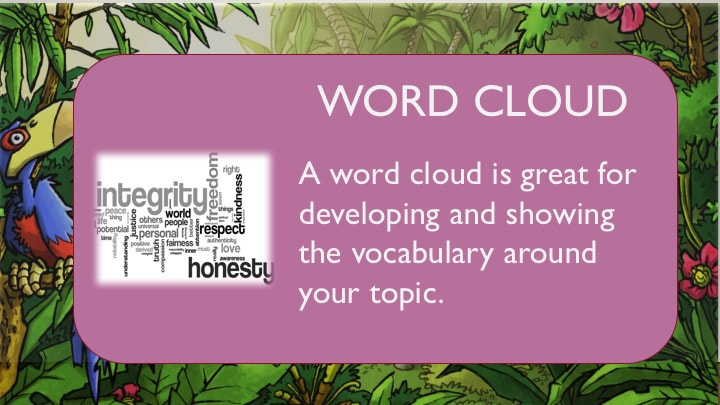
  26. Word clouds: ​students  create a word cloud to represent the vocabulary of a current research topic.
Picture
Picture
Picture
Picture
Picture
Picture
Picture
Picture
Picture
  • Home
    • Knowledge Compass
    • Studyvibe
  • A-Z
  • Inquiry Process
    • The Research Grid
    • Key Stages of an Inquiry
    • Research Funnel
  • DEFINING
    • Mindmapping
    • Starburst Brainstorming
    • Graphic Organisers >
      • Student Showcase
    • Questions and Questioning >
      • Knowledge Compass
    • Research Task Verbs
  • LOCATING
    • Great Research Reference Sites
    • Searching the Web >
      • Boolean Searching
    • Searching with Google
    • Sources of Information
    • Website Evaluation
    • Fake websites
  • SELECTING
    • Content Curation
    • Creative Commons
    • Image Library
    • Notemaking >
      • Notemaking Apps and tools
      • Notemaking videos
    • Plagiarism
    • Referencing
  • ORGANISING
  • PRESENTING
    • Animation Tools >
      • Avatars
    • Brochure
    • Cartoon Makers
    • Digital Storytelling >
      • Digital Storytelling Resources
    • eBooks
    • Essay Writing
    • Infographics
    • Multimedia Presentations
    • Oral Presentations
    • Podcast
    • Posters >
      • Pic Collage Gallery
    • Website
  • EVALUATING
  • Mini Safaris
  • Trail Blazers
    • Trailblazer Subscription
    • The Ancient World >
      • Ancient China (Teachers)
      • Ancient China (Students)
      • Ancient Egypt
    • Bees >
      • Bees - Curriculum Links
    • Biomes >
      • Biomes - Curriculum Links
    • Cane Toads
    • Colonial Australia
    • Coral Reefs
    • Deserts
    • Dugongs
    • Government >
      • Government Curriculum Links
    • Great Pacific Garbage Patch
    • Introduced Species >
      • Introduced Species - Curriculum Links
    • Medieval Europe >
      • The Black Death
      • Christianity
      • Medieval Warfare
      • Curriculum Links
    • Rainforests
    • Renewable Energy >
      • Bioenergy
      • Geothermal Energy
      • Hydroelectric Power
      • Solar Energy
      • Wind Energy
    • Shogun Japan >
      • Gallery
    • Water >
      • Water images and infographics
      • Water Videos
      • Curriculum Links
    • Whales
  • Teacher Zone
    • All things Google
    • Australian Curriculum Links
    • Information Literacy Models
    • Information Literacy as a Transversal Competency
    • Infographic Library
    • Learning Frameworks
    • Project Websites
    • Real World Learning
    • Topic Ideas
    • Worksheet Library
  • Links
    • Knowledge Compass
    • Studyvibe
    • UN Sustainable Development Goals Project
    • Inspired Libraries Website
    • Teenage identity and Social Media